Junior college (Class 11-12)

Class 12 previous year questions (PYQ)

60,583 previous year Class 12 questions, grouped by year, with answers and solutions.

2026 (3719 questions)

Q1.

If a discrete random variable $X$ takes the values $1, 2, 3, 4$ such that $2P(X = 1) = 3P(X = 2) = P(X = 3) = 5P(X = 4)$, then $P(X = 4) = ...$ (in $61$)

(A)
$15$
(B)
$30$
(C)
$10$
(D)
$6$
Show answer & solution
Verified Answer & Solution Locked
Sign in to your free student account to reveal verified answers and step-by-step solutions.

Sign in to view
Q2.

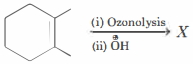
Consider the following sequence of reactions. The percentage of nitrogen in the yellow product $(X)$ formed is . . . . . . %. (Nearest Integer) (Given Molar mass in g mol$^{-1}$ $H$:$1$, $C$:$12$, $N$:$14$)

figure

(A)
$21$
(B)
$28$
(C)
$30$
(D)
$32$
Show answer & solution
Verified Answer & Solution Locked
Sign in to your free student account to reveal verified answers and step-by-step solutions.
Sign in to view

2025 (4845 questions)

Q1.

Let the system of equations: $2x + 3y + 5z = 9$,$7x + 3y - 2z = 8$,$12x + 3y - (4 + \lambda)z = 16 - \mu$ have infinitely many solutions. Then the radius of the circle centred at $(\lambda, \mu)$ and touching the line $4x = 3y$ is

(A)
$\frac{17}{5}$
(B)
$\frac{7}{5}$
(C)
$7$
(D)
$\frac{21}{5}$
Show answer & solution
Verified Answer & Solution Locked
Sign in to your free student account to reveal verified answers and step-by-step solutions.
Sign in to view
Q2.

If $a$ is the determinant of the adjoint of the matrix $A = \begin{bmatrix} 1 & 1 & 2 \\ 1 & 2 & 3 \\ 2 & 3 & 3 \end{bmatrix}$ and $b$ is the determinant of the inverse of the matrix $B = \begin{bmatrix} 1 & 2 & 3 \\ 4 & -3 & -1 \\ 2 & 1 & -4 \end{bmatrix}$,then find the value of $\frac{b+1}{18b}$.

(A)
$a$
(B)
$10a$
(C)
$2+a$
(D)
$2a$
Show answer & solution
Verified Answer & Solution Locked
Sign in to your free student account to reveal verified answers and step-by-step solutions.
Sign in to view

2024 (6598 questions)

Q1.

$A$ $p-n$ junction diode is connected to a battery of emf $5.7 \ V$ in series with a resistor of $5 \ k\Omega$ such that it is forward biased. If the barrier potential of the diode is $0.7 \ V$,neglecting the diode resistance,the current in the circuit is:

(A)
$1.14 \ mA$
(B)
$1 \ mA$
(C)
$1 \ A$
(D)
$1.14 \ A$
Show answer & solution
Verified Answer & Solution Locked
Sign in to your free student account to reveal verified answers and step-by-step solutions.
Sign in to view
Q2.

Which one of the following is an amphoteric oxide?

(A)
$V_2O_3$
(B)
$CrO$
(C)
$Cr_2O_3$
(D)
$CrO_3$
Show answer & solution
Verified Answer & Solution Locked
Sign in to your free student account to reveal verified answers and step-by-step solutions.
Sign in to view

2023 (5080 questions)

Q1.

Insulin receptors are

(A)
extrinsic proteins
(B)
intrinsic proteins
(C)
G-proteins
(D)
trimeric proteins
Show answer & solution
Verified Answer & Solution Locked
Sign in to your free student account to reveal verified answers and step-by-step solutions.
Sign in to view
Q2.

If the line $\frac{x-1}{2}=\frac{y+1}{3}=\frac{z-2}{4}$ meets the plane $x+2y+3z=15$ at the point $P$,then the distance of $P$ from the origin is

(A)
$\frac{7}{2}$ units
(B)
$\frac{9}{2}$ units
(C)
$\frac{\sqrt{5}}{2}$ units
(D)
$2 \sqrt{5}$ units
Show answer & solution
Verified Answer & Solution Locked
Sign in to your free student account to reveal verified answers and step-by-step solutions.
Sign in to view

2022 (4987 questions)

Q1.

Let $y=y(x)$ be the solution curve of the differential equation $\frac{dy}{dx} + \left(\frac{2x^2+11x+13}{x^3+6x^2+11x+6}\right)y = \frac{x+3}{x+1}$,where $x \gt -1$,which passes through the point $(0,1)$. Then $y(1)$ is equal to:

(A)
$\frac{1}{2}$
(B)
$\frac{3}{2}$
(C)
$\frac{5}{2}$
(D)
$\frac{7}{2}$
Show answer & solution
Verified Answer & Solution Locked
Sign in to your free student account to reveal verified answers and step-by-step solutions.
Sign in to view
Q2.

The area bounded by the curves $y = |x^{2} - 1|$ and $y = 1$ is:

(A)
$\frac{2}{3}(\sqrt{2} + 1)$
(B)
$\frac{4}{3}(\sqrt{2} - 1)$
(C)
$2(\sqrt{2} - 1)$
(D)
$\frac{8}{3}(\sqrt{2} - 1)$
Show answer & solution
Verified Answer & Solution Locked
Sign in to your free student account to reveal verified answers and step-by-step solutions.
Sign in to view

2021 (4867 questions)

Q1.

Let $\overrightarrow{a} = \hat{i} + 2\hat{j} - 3\hat{k}$ and $\overrightarrow{b} = 2\hat{i} - 3\hat{j} + 5\hat{k}$. If $\overrightarrow{r} \times \overrightarrow{a} = \overrightarrow{b} \times \overrightarrow{r}$,$\overrightarrow{r} \cdot (\alpha\hat{i} + 2\hat{j} + \hat{k}) = 3$ and $\overrightarrow{r} \cdot (2\hat{i} + 5\hat{j} - \alpha\hat{k}) = -1$,where $\alpha \in R$,then the value of $\alpha + |\overrightarrow{r}|^{2}$ is equal to:

(A)
$9$
(B)
$15$
(C)
$13$
(D)
$11$
Show answer & solution
Verified Answer & Solution Locked
Sign in to your free student account to reveal verified answers and step-by-step solutions.
Sign in to view
Q2.

If $\vec{a}=\hat{i}+2\hat{j}+3\hat{k}$,$\vec{b}=-\hat{i}+2\hat{j}+\hat{k}$,$\vec{c}=3\hat{i}+\hat{j}$ and $\vec{a}+\lambda\vec{b}$ is perpendicular to $\vec{c}$,then $\lambda=$

(A)
$5$
(B)
$2$
(C)
$3$
(D)
$4$
Show answer & solution
Verified Answer & Solution Locked
Sign in to your free student account to reveal verified answers and step-by-step solutions.
Sign in to view

2020 (4915 questions)

Q1.

How many primary amines are possible for the formula $C_4H_{11}N$?

(A)
$2$
(B)
$4$
(C)
$1$
(D)
$3$
Show answer & solution
Verified Answer & Solution Locked
Sign in to your free student account to reveal verified answers and step-by-step solutions.
Sign in to view
Q2.

$ABCD$ is a parallelogram,$P$ is the mid-point of $AB$. If $R$ is the point of intersection of $AC$ and $DP$,then $R$ divides $AC$ internally in the ratio

(A)
$3: 1$
(B)
$2: 1$
(C)
$1: 2$
(D)
$2: 3$
Show answer & solution
Verified Answer & Solution Locked
Sign in to your free student account to reveal verified answers and step-by-step solutions.
Sign in to view

2019 (3647 questions)

Q1.

Given three vectors $a=2 \hat{i}-\hat{j}+\hat{k}$,$b=\hat{i}+2 \hat{j}-\hat{k}$,and $c=\hat{i}+\hat{j}-2 \hat{k}$,a vector in the plane of $b$ and $c$ whose projection on $a$ is of magnitude $\sqrt{\frac{2}{3}}$ is

(A)
$-2 \hat{i}-\hat{j}+5 \hat{k}$
(B)
$2 \hat{i}+3 \hat{j}+3 \hat{k}$
(C)
$2 \hat{i}+\hat{j}+5 \hat{k}$
(D)
$2 \hat{i}-3 \hat{j}+3 \hat{k}$
Show answer & solution
Verified Answer & Solution Locked
Sign in to your free student account to reveal verified answers and step-by-step solutions.
Sign in to view
Q2.

If the vectors \(a\hat{i} + \hat{j} + \hat{k}\), \(\hat{i} + b\hat{j} + \hat{k}\) and \(\hat{i} + \hat{j} + c\hat{k}\) are coplanar (\(a \neq b \neq c \neq 1\)), then the value of \(abc - (a+b+c)\) =

(A)
2
(B)
2
(C)
0
(D)
1
Show answer & solution
Verified Answer & Solution Locked
Sign in to your free student account to reveal verified answers and step-by-step solutions.
Sign in to view

2018 (2682 questions)

Q1.

A small bulb is placed at the bottom of a tank containing water to a depth of \(\sqrt{7}\, \text{m}\). The refractive index of water is \(\tfrac{4}{3}\). The area of the surface of water through which light from the bulb can emerge out of \(x\pi \, \text{m}^2\). The value of \(x\) is ______.  
 

Show answer & solution
Verified Answer & Solution Locked
Sign in to your free student account to reveal verified answers and step-by-step solutions.
Sign in to view
Q2.

Question
In the following in each set a conservation approach and an example of method of conservation are given  
(a) In situ conservation – Biosphere Reserve  
(b) Ex situ conservation – Sacred groves  
(c) In situ conservation – Seed bank  
(d) Ex situ conservation – Cryopreservation  
Select the option with correct match of approach and method :  

(A)
(a) and (c)
(B)
(a) and (d)
(C)
(b) and (d)
(D)
(a) and (b)
Show answer & solution
Verified Answer & Solution Locked
Sign in to your free student account to reveal verified answers and step-by-step solutions.
Sign in to view

2017 (2441 questions)

Q1.

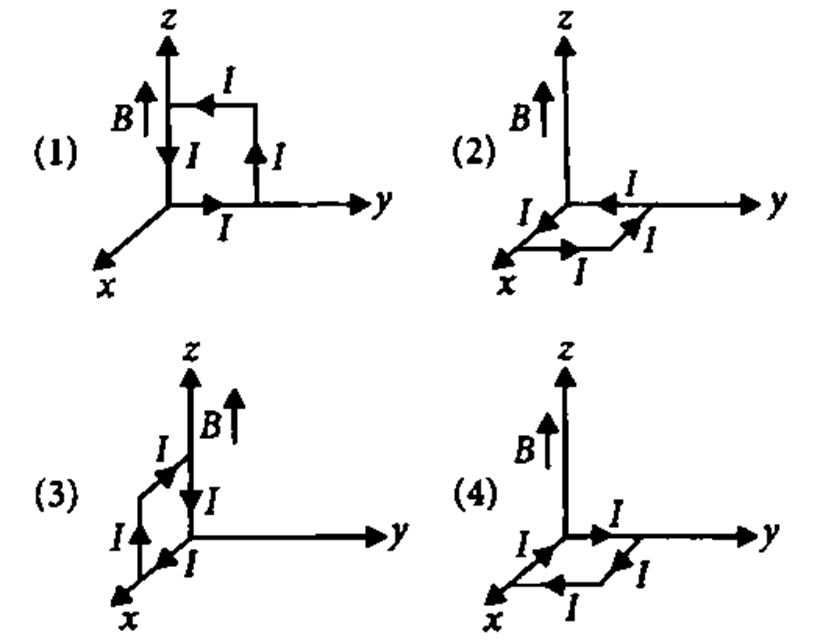
A rectangular loop of sides 10 cm and 5 cm carrying a current \( I = 12 \, \text{A} \) is placed in different orientations as shown in the figure.  
If there is a uniform magnetic field of \( 0.3 \, T \) in the positive \( z \)-direction, in which orientations the loop would be in  
(i) stable equilibrium and (ii) unstable equilibrium.  

(A)
(2) and (4), respectively
(B)
(2) and (3), respectively
(C)
(1) and (2), respectively
(D)
(1) and (3), respectively
Show answer & solution
Verified Answer & Solution Locked
Sign in to your free student account to reveal verified answers and step-by-step solutions.
Sign in to view
Q2.

The rate of a reaction $A$ doubles on increasing the temperature from $300 \, K$ to $310 \, K$. By how much should the temperature of reaction $B$ be increased from $300 \, K$ so that its rate doubles,if the activation energy of reaction $B$ is twice that of reaction $A$ (in $, K$)?

(A)
$9.84$
(B)
$4.92$
(C)
$2.45$
(D)
$19.67$
Show answer & solution
Verified Answer & Solution Locked
Sign in to your free student account to reveal verified answers and step-by-step solutions.
Sign in to view

2016 (2039 questions)

Q1.

Which among the following carboxylic acids is a tricarboxylic acid?

(A)
Oxalic acid
(B)
Citric acid
(C)
Succinic acid
(D)
Adipic acid
Show answer & solution
Verified Answer & Solution Locked
Sign in to your free student account to reveal verified answers and step-by-step solutions.
Sign in to view
Q2.

Two inductors $L_1$ (inductance $1 \text{ mH}$,internal resistance $3 \text{ } \Omega$) and $L_2$ (inductance $2 \text{ mH}$,internal resistance $4 \text{ } \Omega$),and a resistor $R$ (resistance $12 \text{ } \Omega$) are all connected in parallel across a $5 \text{ V}$ battery. The circuit is switched on at time $t=0$. The ratio of the maximum to the minimum current $(I_{\max} / I_{\min})$ drawn from the battery is:

(A)
$6$
(B)
$8$
(C)
$7$
(D)
$5$
Show answer & solution
Verified Answer & Solution Locked
Sign in to your free student account to reveal verified answers and step-by-step solutions.
Sign in to view

2015 (1897 questions)

Q1.

If \( x = \sqrt{a^{\sin^{-1}t}} \) and \( y = \sqrt{a^{\cos^{-1}t}} \), then \( \frac{dy}{dx} = \)  

(A)
\(-\frac{y}{x}\)
(B)
\(\frac{y}{x}\)
(C)
\(-\frac{x}{y}\)
(D)
\(\frac{x}{y}\)
Show answer & solution
Verified Answer & Solution Locked
Sign in to your free student account to reveal verified answers and step-by-step solutions.
Sign in to view
Q2.

Let 
A = 
\begin{bmatrix}
3 & -2 & 1 \\
-1 & 3 & -1
\end{bmatrix}
\text{ and }
B = 
\begin{bmatrix}
1 \\
\alpha \\
-1
\end{bmatrix}.
If 
AB = 
\begin{bmatrix}
-2 \\
6
\end{bmatrix},
\text{ then the value of } \alpha \text{ is equal to}

(A)
1
(B)
1
(C)
2
(D)
2
(E)
0
Show answer & solution
Verified Answer & Solution Locked
Sign in to your free student account to reveal verified answers and step-by-step solutions.
Sign in to view

2014 (1008 questions)

Q1.

Galvanized iron is coated with which metal?

(A)
$Zn$
(B)
$Mg$
(C)
$Fe$
(D)
$Al$
Show answer & solution
Verified Answer & Solution Locked
Sign in to your free student account to reveal verified answers and step-by-step solutions.
Sign in to view
Q2.

In the following reaction,the major product $X$ is

figure

(A)
$3-$methylcyclohex$-2-$en$-1-$one
(B)
$2-$methylcyclopent$-1-$enecarbaldehyde
(C)
heptane$-2,6-$dione
(D)
$2-$methylcyclohex$-2-$en$-1-$one
Show answer & solution
Verified Answer & Solution Locked
Sign in to your free student account to reveal verified answers and step-by-step solutions.
Sign in to view

2013 (1053 questions)

Q1.

Which one of the following is a hallucinogenic drug?

(A)
Caffeine
(B)
Morphine
(C)
Lysergic acid diethylamide
(D)
Opium
Show answer & solution
Verified Answer & Solution Locked
Sign in to your free student account to reveal verified answers and step-by-step solutions.
Sign in to view
Q2.

Four persons independently solve a certain problem correctly with probabilities $\frac{1}{2}, \frac{3}{4}, \frac{1}{4}, \frac{1}{8}$. Then the probability that the problem is solved correctly by at least one of them is

(A)
$\frac{235}{256}$
(B)
$\frac{21}{256}$
(C)
$\frac{3}{256}$
(D)
$\frac{253}{256}$
Show answer & solution
Verified Answer & Solution Locked
Sign in to your free student account to reveal verified answers and step-by-step solutions.
Sign in to view

2012 (1061 questions)

Q1.

Which of the following conditions favours the reduction of a metal oxide to metal?

(A)
$\Delta H = +ve, T \Delta S = +ve$ at low temperature
(B)
$\Delta H = +ve, T \Delta S = -ve$ at any temperature
(C)
$\Delta H = -ve, T \Delta S = -ve$ at high temperature
(D)
$\Delta H = -ve, T \Delta S = +ve$ at any temperature
Show answer & solution
Verified Answer & Solution Locked
Sign in to your free student account to reveal verified answers and step-by-step solutions.
Sign in to view
Q2.

If $y(x)$ satisfies the differential equation $y^{\prime}-y \tan x=2 x \sec x$ and $y(0)=0$,then which of the following is true?

(A)
$(A, D)$
(B)
$(B, C)$
(C)
$(A, C)$
(D)
$(C, D)$
Show answer & solution
Verified Answer & Solution Locked
Sign in to your free student account to reveal verified answers and step-by-step solutions.
Sign in to view

2011 (927 questions)

Q1.

Of the total incident solar radiation,the proportion of $PAR$ is:

(A)
about $70\%$
(B)
about $60\%$
(C)
less than $50\%$
(D)
more than $80\%$
Show answer & solution
Verified Answer & Solution Locked
Sign in to your free student account to reveal verified answers and step-by-step solutions.
Sign in to view
Q2.

$A$ plane passes through $(2,3,-1)$ and is perpendicular to the line having direction ratios $3,-4,7$. The perpendicular distance from the origin to this plane is

(A)
$\frac{3}{\sqrt{74}}$
(B)
$\frac{5}{\sqrt{74}}$
(C)
$\frac{6}{\sqrt{74}}$
(D)
$\frac{13}{\sqrt{74}}$
Show answer & solution
Verified Answer & Solution Locked
Sign in to your free student account to reveal verified answers and step-by-step solutions.
Sign in to view

2010 (869 questions)

Q1.

If $I_1 = \int_0^{3 \pi} f(\cos^2 x) dx$ and $I_2 = \int_0^\pi f(\cos^2 x) dx$, then

(A)
$I_1 = I_2$
(B)
$3 I_1 = I_2$
(C)
$I_1 = 3 I_2$
(D)
$I_1 = 5 I_2$
Show answer & solution
Verified Answer & Solution Locked
Sign in to your free student account to reveal verified answers and step-by-step solutions.
Sign in to view
Q2.

$A$ plane meets the coordinate axes at $A, B, C$ such that the centroid of the triangle $ABC$ is $(1, 2, 4)$. Then,the equation of the plane is

(A)
$x+2y+4z=12$
(B)
$4x+2y+z=12$
(C)
$x+2y+4z=3$
(D)
$4x+2y+z=3$
Show answer & solution
Verified Answer & Solution Locked
Sign in to your free student account to reveal verified answers and step-by-step solutions.
Sign in to view

2009 (805 questions)

Q1.

The number of electrons in $2 \ C$ of charge is:

(A)
$5 \times 10^{29}$
(B)
$1.25 \times 10^{19}$
(C)
$1.6 \times 10^{19}$
(D)
$9 \times 10^{11}$
Show answer & solution
Verified Answer & Solution Locked
Sign in to your free student account to reveal verified answers and step-by-step solutions.
Sign in to view
Q2.

If $\overrightarrow{a} \cdot \overrightarrow{b} = -|\overrightarrow{a}||\overrightarrow{b}|$,then the angle between $\overrightarrow{a}$ and $\overrightarrow{b}$ is (in $^{\circ}$)

(A)
$45$
(B)
$180$
(C)
$90$
(D)
$60$
Show answer & solution
Verified Answer & Solution Locked
Sign in to your free student account to reveal verified answers and step-by-step solutions.
Sign in to view

2008 (674 questions)

Q1.

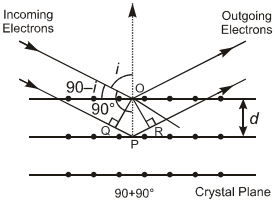
The wave property of electrons implies that they will show diffraction effects. Davisson and Germer demonstrated this by diffracting electrons from crystals. The law governing the diffraction from a crystal is obtained by requiring that electron waves reflected from the planes of atoms in a crystal interfere constructively (see figure).
Electrons accelerated by potential $V$ are diffracted from a crystal. If $d = 1\; \text{\AA}$, and $i = 30^{\circ}$, $V$ should be about ....... $V$.
$(h = 6.6 \times 10^{-34}\; J-s, m = 9.1 \times 10^{-31}\; kg, e = 1.6 \times 10^{-19}\; C)$

figure

(A)
$500$
(B)
$50$
(C)
$1000$
(D)
$2000$
Show answer & solution
Verified Answer & Solution Locked
Sign in to your free student account to reveal verified answers and step-by-step solutions.
Sign in to view
Q2.

Which equation is true to calculate the energy of activation,if the rate of reaction is doubled by increasing temperature from $T_1 \ K$ to $T_2 \ K$?

(A)
$\log_{10} \frac{k_2}{k_1} = \frac{E_a}{2.303R} \left[ \frac{T_2 - T_1}{T_1 T_2} \right]$
(B)
$\log_{10} 2 = \frac{E_a}{2.303R} \left[ \frac{T_2 - T_1}{T_1 T_2} \right]$
(C)
$\log_{10} \frac{k_1}{k_2} = \frac{E_a}{2.303R} \left[ \frac{1}{T_1} - \frac{1}{T_2} \right]$
(D)
$\log_{10} \frac{1}{2} = \frac{E_a}{2.303} \left[ \frac{1}{T_2} - \frac{1}{T_1} \right]$
Show answer & solution
Verified Answer & Solution Locked
Sign in to your free student account to reveal verified answers and step-by-step solutions.
Sign in to view

2007 (706 questions)

Q1.

If $2 x^2-3 x y+y^2+x+2 y-8=0$,then $\frac{d y}{d x}$ is equal to

(A)
$\frac{3 y-4 x-1}{2 y-3 x+2}$
(B)
$\frac{3 y+4 x+1}{2 y+3 x+2}$
(C)
$\frac{3 y-4 x+1}{2 y-3 x-2}$
(D)
$\frac{3 y-4 x+1}{2 y+3 x+2}$
Show answer & solution
Verified Answer & Solution Locked
Sign in to your free student account to reveal verified answers and step-by-step solutions.
Sign in to view
Q2.

The largest wavelength in the ultraviolet region of the hydrogen spectrum is $122 \ nm$. The smallest wavelength in the infrared region of the hydrogen spectrum (to the nearest integer) is (in $nm$)

(A)
$802$
(B)
$823$
(C)
$1882$
(D)
$1648$
Show answer & solution
Verified Answer & Solution Locked
Sign in to your free student account to reveal verified answers and step-by-step solutions.
Sign in to view

2006 (495 questions)

Q1.

Which of the following units denotes the dimension $\frac{M L^2}{Q^2}$,where $Q$ denotes the electric charge?

(A)
$Weber$ $(Wb)$
(B)
$Wb / m^2$
(C)
$Henry$ $(H)$
(D)
$H / m^2$
Show answer & solution
Verified Answer & Solution Locked
Sign in to your free student account to reveal verified answers and step-by-step solutions.
Sign in to view
Q2.

Assertion : The water pouch of an instant cold pack for treating athletic injuries breaks when squeezed and $NH_4NO_3$ dissolves,lowering the temperature.
Reason : Addition of a non-volatile solute into a solvent results in the depression of the freezing point of the solvent.

(A)
If both Assertion and Reason are correct and the Reason is a correct explanation of the Assertion.
(B)
If both Assertion and Reason are correct but Reason is not a correct explanation of the Assertion.
(C)
If the Assertion is correct but Reason is incorrect.
(D)
If both the Assertion and Reason are incorrect.
Show answer & solution
Verified Answer & Solution Locked
Sign in to your free student account to reveal verified answers and step-by-step solutions.
Sign in to view

2005 (560 questions)

Q1.

The distance between the line $r = 2i - 2j + 3k + \lambda (i - j + 4k)$ and the plane $r \cdot (i + 5j + k) = 5$ is

(A)
$\frac{3}{10}$
(B)
$\frac{10}{3}$
(C)
$\frac{10}{9}$
(D)
$\frac{10}{3\sqrt{3}}$
Show answer & solution
Verified Answer & Solution Locked
Sign in to your free student account to reveal verified answers and step-by-step solutions.
Sign in to view
Q2.

The area (in square units) bounded by the curves $y^2=4x$ and $x^2=4y$ in the plane is

(A)
$\frac{8}{3}$
(B)
$\frac{16}{3}$
(C)
$\frac{32}{3}$
(D)
$\frac{64}{3}$
Show answer & solution
Verified Answer & Solution Locked
Sign in to your free student account to reveal verified answers and step-by-step solutions.
Sign in to view

2004 (593 questions)

Q1.

Among $K, Ca, Fe,$ and $Zn$,the element which can form more than one binary compound with chlorine is

(A)
$K$
(B)
$Ca$
(C)
$Fe$
(D)
$Zn$
Show answer & solution
Verified Answer & Solution Locked
Sign in to your free student account to reveal verified answers and step-by-step solutions.
Sign in to view
Q2.

Which of the following is the strongest base?

(A)
o-Toluidine ($2$-methylaniline)
(B)
$N$-Methylaniline
(C)
Aniline
(D)
Benzylamine
Show answer & solution
Verified Answer & Solution Locked
Sign in to your free student account to reveal verified answers and step-by-step solutions.
Sign in to view

2003 (528 questions)

Q1.

Solar energy is mainly caused due to

(A)
Fission of uranium present in the sun
(B)
Fusion of protons during synthesis of heavier elements
(C)
Gravitational contraction
(D)
Burning of hydrogen in the oxygen
Show answer & solution
Verified Answer & Solution Locked
Sign in to your free student account to reveal verified answers and step-by-step solutions.
Sign in to view
Q2.

Assertion : Benzyl bromide when kept in acetone water,it produces benzyl alcohol.
Reason : The reaction follows $S_{N}2$ mechanism.

(A)
If both Assertion and Reason are correct and the Reason is a correct explanation of the Assertion.
(B)
If both Assertion and Reason are correct but Reason is not a correct explanation of the Assertion.
(C)
If the Assertion is correct but Reason is incorrect.
(D)
If both the Assertion and Reason are incorrect.
Show answer & solution
Verified Answer & Solution Locked
Sign in to your free student account to reveal verified answers and step-by-step solutions.
Sign in to view

2002 (530 questions)

Q1.

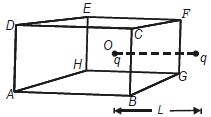
$A$ charged particle $q$ is placed at the centre $O$ of a cube of side length $L$ $(A, B, C, D, E, F, G, H)$. Another identical charge $q$ is placed at a distance $L$ from $O$, outside the cube, as shown in the figure. The electric flux through the face $BGFC$ is

figure

(A)
$q / (4\pi \varepsilon_0 L)$
(B)
zero
(C)
$q / (2\pi \varepsilon_0 L)$
(D)
$q / (3\pi \varepsilon_0 L)$
Show answer & solution
Verified Answer & Solution Locked
Sign in to your free student account to reveal verified answers and step-by-step solutions.
Sign in to view
Q2.

If a current is passed through a spring,then the spring will:

(A)
compress
(B)
remain the same
(C)
none of these
(D)
remain unchanged
Show answer & solution
Verified Answer & Solution Locked
Sign in to your free student account to reveal verified answers and step-by-step solutions.
Sign in to view

2001 (437 questions)

Q1.

Assertion: In Young's experiment,the fringe width for dark fringes is different from that for bright fringes.
Reason: In Young's double slit experiment,if the fringes are performed with a source of white light,then only black and bright fringes are observed.

(A)
If both Assertion and Reason are correct and the Reason is a correct explanation of the Assertion.
(B)
If both Assertion and Reason are correct but Reason is not a correct explanation of the Assertion.
(C)
If the Assertion is correct but Reason is incorrect.
(D)
If both the Assertion and Reason are incorrect.
Show answer & solution
Verified Answer & Solution Locked
Sign in to your free student account to reveal verified answers and step-by-step solutions.
Sign in to view
Q2.

Which of the following is prepared by the electrolytic method?

(A)
$Ca$
(B)
$Sn$
(C)
$S$
(D)
$F_2$
Show answer & solution
Verified Answer & Solution Locked
Sign in to your free student account to reveal verified answers and step-by-step solutions.
Sign in to view

2000 (214 questions)

Q1.

Assertion : Copper reacts with $HCl$ and liberates hydrogen.
Reason : Hydrogen is present above $Cu$ in the reactivity series.

(A)
If both Assertion and Reason are correct and the Reason is a correct explanation of the Assertion.
(B)
If both Assertion and Reason are correct but Reason is not a correct explanation of the Assertion.
(C)
If the Assertion is correct but Reason is incorrect.
(D)
If the Assertion is incorrect but the Reason is correct.
Show answer & solution
Verified Answer & Solution Locked
Sign in to your free student account to reveal verified answers and step-by-step solutions.
Sign in to view
Q2.

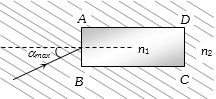
$A$ rectangular glass slab $ABCD$,of refractive index $n_1$,is immersed in water of refractive index $n_2$ $(n_1 \gt n_2)$. $A$ ray of light is incident at the surface $AB$ of the slab as shown. The maximum value of the angle of incidence $\alpha_{max}$,such that the ray comes out only from the other surface $CD$,is given by

figure

(A)
$\sin^{-1} \left[ \frac{n_1}{n_2} \cos \left( \sin^{-1} \frac{n_2}{n_1} \right) \right]$
(B)
$\sin^{-1} \left[ n_1 \cos \left( \sin^{-1} \frac{1}{n_2} \right) \right]$
(C)
$\sin^{-1} \left( \frac{n_1}{n_2} \right)$
(D)
$\sin^{-1} \left( \frac{n_2}{n_1} \right)$
Show answer & solution
Verified Answer & Solution Locked
Sign in to your free student account to reveal verified answers and step-by-step solutions.
Sign in to view

1999 (272 questions)

Q1.

Energy in the sun is generated mainly by

(A)
Fusion of radioactive material
(B)
Fission of helium atoms
(C)
Chemical reaction
(D)
Fusion of hydrogen atoms
Show answer & solution
Verified Answer & Solution Locked
Sign in to your free student account to reveal verified answers and step-by-step solutions.
Sign in to view
Q2.

$A$ bar magnet of magnetic moment $\overrightarrow{M}$ is placed in a magnetic field of induction $\overrightarrow{B}$. The torque exerted on it is

(A)
$\overrightarrow{M} \cdot \overrightarrow{B}$
(B)
$-\overrightarrow{M} \cdot \overrightarrow{B}$
(C)
$\overrightarrow{M} \times \overrightarrow{B}$
(D)
$\overrightarrow{B} \times \overrightarrow{M}$
Show answer & solution
Verified Answer & Solution Locked
Sign in to your free student account to reveal verified answers and step-by-step solutions.
Sign in to view

1998 (271 questions)

Q1.

$A$ dielectric slab of thickness $d$ is inserted in a parallel plate capacitor whose negative plate is at $x = 0$ and positive plate is at $x = 3d$. The slab is equidistant from the plates. The capacitor is given some charge. As one goes from $x = 0$ to $x = 3d$:

(A)
The magnitude of the electric field remains the same.
(B)
The direction of the electric field remains the same.
(C)
The electric potential increases continuously.
(D)
Both $(b)$ and $(c)$.
Show answer & solution
Verified Answer & Solution Locked
Sign in to your free student account to reveal verified answers and step-by-step solutions.
Sign in to view
Q2.

$IUPAC$ name of $[Pt(NH_3)_3(Br)(NO_2)Cl]Cl$ is

(A)
Triamminechlorobromonitroplatinum $(IV)$ chloride
(B)
Triamminebromonitrochloroplatinum $(IV)$ chloride
(C)
Triamminebromochloronitroplatinum $(IV)$ chloride
(D)
Triamminenitrochlorobromoplatinum $(IV)$ chloride
Show answer & solution
Verified Answer & Solution Locked
Sign in to your free student account to reveal verified answers and step-by-step solutions.
Sign in to view

1997 (208 questions)

Q1.

Let $p, q, r$ be three mutually perpendicular vectors of the same magnitude. If a vector $x$ satisfies the equation $p \times \{(x - q) \times p\} + q \times \{(x - r) \times q\} + r \times \{(x - p) \times r\} = 0$,then $x$ is given by

(A)
$\frac{1}{2}(p + q - 2r)$
(B)
$\frac{1}{2}(p + q + r)$
(C)
$\frac{1}{3}(p + q + r)$
(D)
$\frac{1}{3}(2p + q - r)$
Show answer & solution
Verified Answer & Solution Locked
Sign in to your free student account to reveal verified answers and step-by-step solutions.
Sign in to view
Q2.

When chloroform reacts with ethyl amine in the presence of alcoholic $KOH$,the compound formed is

(A)
Ethyl cyanide
(B)
Ethyl isocyanide
(C)
Formic acid
(D)
An amide
Show answer & solution
Verified Answer & Solution Locked
Sign in to your free student account to reveal verified answers and step-by-step solutions.
Sign in to view

1996 (172 questions)

Q1.

Arrhenotoky is a type of parthenogenetic development found in:

(A)
All insects
(B)
Mosquitoes
(C)
Butterflies
(D)
Honey bees,wasps,and ants
Show answer & solution
Verified Answer & Solution Locked
Sign in to your free student account to reveal verified answers and step-by-step solutions.
Sign in to view
Q2.

Which of the following is a true fruit?

(A)
Apple
(B)
Pear
(C)
Cashew
(D)
Coconut
Show answer & solution
Verified Answer & Solution Locked
Sign in to your free student account to reveal verified answers and step-by-step solutions.
Sign in to view

1995 (183 questions)

Q1.

Which of the following pairs is not correctly matched?

(A)
Dengue fever - Arbovirus
(B)
Plague - Yersinia pestis
(C)
Syphilis - Trichuris trichiura
(D)
Sleeping sickness - Trypanosoma gambiense
Show answer & solution
Verified Answer & Solution Locked
Sign in to your free student account to reveal verified answers and step-by-step solutions.
Sign in to view
Q2.

Which of the following endocrine glands stores its secretion in the extracellular space before releasing it into the blood?

(A)
Pancreas
(B)
Adrenal
(C)
Testis
(D)
Thyroid
Show answer & solution
Verified Answer & Solution Locked
Sign in to your free student account to reveal verified answers and step-by-step solutions.
Sign in to view

1994 (177 questions)

Q1.

The compound which does not react with sodium is

(A)
$C_2H_5OH$
(B)
$CH_3-O-CH_3$
(C)
$CH_3COOH$
(D)
$CH_3-CH(OH)-CH_3$
Show answer & solution
Verified Answer & Solution Locked
Sign in to your free student account to reveal verified answers and step-by-step solutions.
Sign in to view
Q2.

For the adsorption of a gas on a solid,the plot of $\log(x/m)$ versus $\log P$ is linear with slope equal to

(A)
$k$
(B)
$\log k$
(C)
$n$
(D)
$1/n$
Show answer & solution
Verified Answer & Solution Locked
Sign in to your free student account to reveal verified answers and step-by-step solutions.
Sign in to view

1993 (151 questions)

Q1.

The arrangement of nucleotides in $DNA$ can be seen by which of the following techniques?

(A)
$X$-ray crystallography
(B)
Electron microscope
(C)
Ultracentrifuge
(D)
Light microscope
Show answer & solution
Verified Answer & Solution Locked
Sign in to your free student account to reveal verified answers and step-by-step solutions.
Sign in to view
Q2.

Let $a = 2i - j + k$,$b = i + 2j - k$,and $c = i + j - 2k$ be three vectors. $A$ vector in the plane of $b$ and $c$ whose projection on $a$ is of magnitude $\sqrt{2/3}$ is

(A)
$2i + 3j - 3k$ and $-2i - j + 5k$
(B)
$2i + 3j - 3k$
(C)
$-2i - j + 5k$
(D)
$2i + 3j + 3k$
Show answer & solution
Verified Answer & Solution Locked
Sign in to your free student account to reveal verified answers and step-by-step solutions.
Sign in to view

1992 (131 questions)

Q1.

The segregation of Mendelian factors (no linkage,no crossing over) occurs during ............ .

(A)
Anaphase-$I$
(B)
Anaphase-$II$
(C)
Diplotene
(D)
Metaphase-$I$
Show answer & solution
Verified Answer & Solution Locked
Sign in to your free student account to reveal verified answers and step-by-step solutions.
Sign in to view
Q2.

In the presence of $NaOH$,phenol reacts with $CHCl_3$ to form $o$-hydroxybenzaldehyde. This reaction is called:

(A)
Reimer-Tiemann reaction
(B)
Sandmeyer's reaction
(C)
Hoffmann's degradation reaction
(D)
Gattermann's aldehyde synthesis
Show answer & solution
Verified Answer & Solution Locked
Sign in to your free student account to reveal verified answers and step-by-step solutions.
Sign in to view

1991 (141 questions)

Q1.

If $f(x) = \begin{cases} 1, & 0 \lt x \le \frac{3\pi}{4} \\ 2\sin \frac{2}{9}x, & \frac{3\pi}{4} \lt x \lt \pi \end{cases}$,then

(A)
$f(x)$ is continuous at $x = 0$
(B)
$f(x)$ is continuous at $x = \pi$
(C)
$f(x)$ is continuous at $x = \frac{3\pi}{4}$
(D)
$f(x)$ is discontinuous at $x = \frac{3\pi}{4}$
Show answer & solution
Verified Answer & Solution Locked
Sign in to your free student account to reveal verified answers and step-by-step solutions.
Sign in to view
Q2.

Find the odd one out.

(A)
Nucellus
(B)
Embryo sac
(C)
Micropyle
(D)
Pollen grain
Show answer & solution
Verified Answer & Solution Locked
Sign in to your free student account to reveal verified answers and step-by-step solutions.
Sign in to view

1990 (114 questions)

Q1.

$A$ husband and wife both have normal vision,although both of their fathers were colorblind. What is the probability that their daughter will be colorblind (in $\%$)?

(A)
$0$
(B)
$25$
(C)
$50$
(D)
$75$
Show answer & solution
Verified Answer & Solution Locked
Sign in to your free student account to reveal verified answers and step-by-step solutions.
Sign in to view
Q2.

The entry of the pollen tube through the micropyle is known as:

(A)
Chalazogamy
(B)
Mesogamy
(C)
Porogamy
(D)
Pseudogamy
Show answer & solution
Verified Answer & Solution Locked
Sign in to your free student account to reveal verified answers and step-by-step solutions.
Sign in to view

1989 (117 questions)

Q1.

An astronomical telescope has an angular magnification of magnitude $5$ for distant objects. The separation between the objective and the eyepiece is $36 \, cm$ and the final image is formed at infinity. The focal length $f_o$ of the objective and the focal length $f_e$ of the eyepiece are:

(A)
$f_o = 45 \, cm$ and $f_e = -9 \, cm$
(B)
$f_o = 7.2 \, cm$ and $f_e = 5 \, cm$
(C)
$f_o = 50 \, cm$ and $f_e = 10 \, cm$
(D)
$f_o = 30 \, cm$ and $f_e = 6 \, cm$
Show answer & solution
Verified Answer & Solution Locked
Sign in to your free student account to reveal verified answers and step-by-step solutions.
Sign in to view
Q2.

Which of the following has the lowest boiling point?

(A)
$NH_3$
(B)
$PH_3$
(C)
$AsH_3$
(D)
$SbH_3$
Show answer & solution
Verified Answer & Solution Locked
Sign in to your free student account to reveal verified answers and step-by-step solutions.
Sign in to view

1988 (98 questions)

Q1.

Who discovered double fertilization and triple fusion?

(A)
Hofmeister
(B)
Nawaschin and Guignard
(C)
Leeuwenhoek
(D)
Strasburger
Show answer & solution
Verified Answer & Solution Locked
Sign in to your free student account to reveal verified answers and step-by-step solutions.
Sign in to view
Q2.

$\int_0^{1.5} {[x^2] \, dx}$,where $[.]$ denotes the greatest integer function,equals

(A)
$2 + \sqrt{2}$
(B)
$2 - \sqrt{2}$
(C)
$-2 + \sqrt{2}$
(D)
$-2 - \sqrt{2}$
Show answer & solution
Verified Answer & Solution Locked
Sign in to your free student account to reveal verified answers and step-by-step solutions.
Sign in to view

1987 (31 questions)

Q1.

The determinant $\left| \begin{array}{ccc} a & b & a\alpha + b \\ b & c & b\alpha + c \\ a\alpha + b & b\alpha + c & 0 \end{array} \right| = 0$,if $a, b, c$ are in

(A)
$A. P.$
(B)
$G. P.$
(C)
$H. P.$
(D)
None of these
Show answer & solution
Verified Answer & Solution Locked
Sign in to your free student account to reveal verified answers and step-by-step solutions.
Sign in to view
Q2.

The probability of happening at least one of the events $A$ and $B$ is $0.6$. If the events $A$ and $B$ happen simultaneously with a probability of $0.2$,then $P(\bar{A}) + P(\bar{B}) =$

(A)
$0.4$
(B)
$0.8$
(C)
$1.2$
(D)
$1.4$
Show answer & solution
Verified Answer & Solution Locked
Sign in to your free student account to reveal verified answers and step-by-step solutions.
Sign in to view

1986 (29 questions)

Q1.

Amongst the following,$HBr$ reacts fastest with

(A)
Propane-$1$-ol
(B)
Propane-$2$-ol
(C)
$2$-methyl propane-$1$-ol
(D)
$2$-methyl propane-$2$-ol
Show answer & solution
Verified Answer & Solution Locked
Sign in to your free student account to reveal verified answers and step-by-step solutions.
Sign in to view
Q2.

Biotic potential refers to

(A)
Increase of population under optimum conditions
(B)
Increase of population under given conditions
(C)
Increase of population under natural conditions
(D)
Increase of population under climatic conditions
Show answer & solution
Verified Answer & Solution Locked
Sign in to your free student account to reveal verified answers and step-by-step solutions.
Sign in to view

1985 (41 questions)

Q1.

The binding energy of the innermost electron in tungsten is $40 \text{ keV}$. To produce characteristic $X$-rays using a tungsten target in an $X$-ray tube,the potential difference $V$ between the cathode and the anti-cathode should be:

(A)
$V \lt 40 \text{ kV}$
(B)
$V \le 40 \text{ kV}$
(C)
$V \gt 40 \text{ kV}$
(D)
$V \gt /\lt 40 \text{ kV}$
Show answer & solution
Verified Answer & Solution Locked
Sign in to your free student account to reveal verified answers and step-by-step solutions.
Sign in to view
Q2.

$A$ box contains $100$ tickets numbered $1, 2, \dots, 100$. Two tickets are chosen at random. It is given that the maximum number on the two chosen tickets is not more than $10$. What is the probability that the minimum number on them is $5$?

(A)
$\frac{1}{8}$
(B)
$\frac{13}{15}$
(C)
$\frac{1}{7}$
(D)
None of these
Show answer & solution
Verified Answer & Solution Locked
Sign in to your free student account to reveal verified answers and step-by-step solutions.
Sign in to view

1984 (39 questions)

Q1.

If $y = f(x) = \frac{x + 2}{x - 1}$,then $x =$

(A)
$f(y)$
(B)
$2f(y)$
(C)
$\frac{1}{f(y)}$
(D)
None of these
Show answer & solution
Verified Answer & Solution Locked
Sign in to your free student account to reveal verified answers and step-by-step solutions.
Sign in to view
Q2.

The magnitudes of mutually perpendicular forces $a, b$ and $c$ are $2, 10$ and $11$ respectively. Then the magnitude of its resultant is

(A)
$12$
(B)
$15$
(C)
$9$
(D)
None
Show answer & solution
Verified Answer & Solution Locked
Sign in to your free student account to reveal verified answers and step-by-step solutions.
Sign in to view

1983 (62 questions)

Q1.

$\int {\frac{{x - 1}}{{{{(x + 1)}^3}}}{e^x}\,dx = }$

(A)
$\frac{{ - {e^x}}}{{{{(x + 1)}^2}}} + c$
(B)
$\frac{{{e^x}}}{{{{(x + 1)}^2}}} + c$
(C)
$\frac{{{e^x}}}{{{{(x + 1)}^3}}} + c$
(D)
$\frac{{ - {e^x}}}{{{{(x + 1)}^3}}} + c$
Show answer & solution
Verified Answer & Solution Locked
Sign in to your free student account to reveal verified answers and step-by-step solutions.
Sign in to view
Q2.

The highest catenation ability is shown by

(A)
Oxygen
(B)
Sulphur
(C)
Selenium
(D)
Tellurium
Show answer & solution
Verified Answer & Solution Locked
Sign in to your free student account to reveal verified answers and step-by-step solutions.
Sign in to view

1982 (49 questions)

Q1.

$|(a \times b) \cdot c| = |a| |b| |c|$,if

(A)
$a \cdot b = b \cdot c = 0$
(B)
$b \cdot c = c \cdot a = 0$
(C)
$c \cdot a = a \cdot b = 0$
(D)
$a \cdot b = b \cdot c = c \cdot a = 0$
Show answer & solution
Verified Answer & Solution Locked
Sign in to your free student account to reveal verified answers and step-by-step solutions.
Sign in to view
Q2.

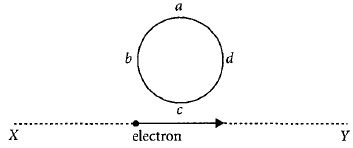
An electron moves on a straight line path $XY$ as shown. The $abcd$ is a coil adjacent to the path of the electron. What will be the direction of current,if any,induced in the coil?

figure

(A)
No current induced
(B)
$abcd$
(C)
$adcb$
(D)
The current will reverse its direction as the electron goes past the coil.
Show answer & solution
Verified Answer & Solution Locked
Sign in to your free student account to reveal verified answers and step-by-step solutions.
Sign in to view

1981 (35 questions)

Q1.

Let $a, b, c$ be non-zero real numbers such that $\int_0^1 {(1 + \cos^8 x)(ax^2 + bx + c) \, dx} = \int_0^2 {(1 + \cos^8 x)(ax^2 + bx + c) \, dx}$. Then the quadratic equation $ax^2 + bx + c = 0$ has:

(A)
No root in $(0, 2)$
(B)
At least one root in $(0, 2)$
(C)
$A$ double root in $(0, 2)$
(D)
None of these
Show answer & solution
Verified Answer & Solution Locked
Sign in to your free student account to reveal verified answers and step-by-step solutions.
Sign in to view
Q2.

The standard reduction potentials at $298 \ K$ for the following half reactions are given against each:
$Zn^{2+}(aq.) + 2e^- \rightleftharpoons Zn_{(s)}$; $E^\circ = -0.762 \ V$
$Cr^{3+}(aq.) + 3e^- \rightleftharpoons Cr_{(s)}$; $E^\circ = -0.740 \ V$
$2H^{+}(aq.) + 2e^- \rightleftharpoons H_{2(g)}$; $E^\circ = 0.00 \ V$
$Fe^{3+}(aq.) + e^- \rightleftharpoons Fe^{2+}(aq.)$; $E^\circ = 0.770 \ V$
Which is the strongest reducing agent?

(A)
$Zn_{(s)}$
(B)
$Cr_{(s)}$
(C)
$H_{2(g)}$
(D)
$Fe^{2+}(aq.)$
Show answer & solution
Verified Answer & Solution Locked
Sign in to your free student account to reveal verified answers and step-by-step solutions.
Sign in to view

1980 (39 questions)

Q1.

Which one of the following nuclear transformations is of the $(n, p)$ type?

(A)
$_{33}As^{75} + _{2}He^{4} \rightarrow _{35}Br^{78} + _{0}n^{1}$
(B)
$_{83}Bi^{209} + _{1}H^{2} \rightarrow _{84}Po^{210} + _{0}n^{1}$
(C)
$_{3}Li^{7} + _{1}H^{1} \rightarrow _{4}Be^{7} + _{0}n^{1}$
(D)
$_{21}Sc^{45} + _{0}n^{1} \rightarrow _{20}Ca^{45} + _{1}H^{1}$
Show answer & solution
Verified Answer & Solution Locked
Sign in to your free student account to reveal verified answers and step-by-step solutions.
Sign in to view
Q2.

$A$ sample of chloroform being used as an anaesthetic is tested by:

(A)
Fehling solution
(B)
$AgNO_3$ solution after boiling with alcoholic $KOH$ solution
(C)
$AgNO_3$ solution
(D)
Both $(b)$ and $(c)$
Show answer & solution
Verified Answer & Solution Locked
Sign in to your free student account to reveal verified answers and step-by-step solutions.
Sign in to view

1979 (9 questions)

Q1.

$A$ charged particle is free to move in an electric field. It will travel

(A)
Always along a line of force
(B)
Along a line of force,if its initial velocity is zero
(C)
Along a line of force,if it has some initial velocity in the direction of an acute angle with the line of force
(D)
None of the above
Show answer & solution
Verified Answer & Solution Locked
Sign in to your free student account to reveal verified answers and step-by-step solutions.
Sign in to view
Q2.

Two fair dice are tossed. Let $A$ be the event that the first die shows an even number and $B$ be the event that the second die shows an odd number. The two events $A$ and $B$ are

(A)
Mutually exclusive
(B)
Independent and mutually exclusive
(C)
Dependent
(D)
Independent
Show answer & solution
Verified Answer & Solution Locked
Sign in to your free student account to reveal verified answers and step-by-step solutions.
Sign in to view

1978 (9 questions)

Q1.

If $x = cy + bz$,$y = az + cx$,$z = bx + ay$ (where $x, y, z$ are not all zero) have a solution other than $x = 0, y = 0, z = 0$,then $a, b$,and $c$ are connected by the relation:

(A)
$a^2 + b^2 + c^2 + 3abc = 0$
(B)
$a^2 + b^2 + c^2 + 2abc = 0$
(C)
$a^2 + b^2 + c^2 + 2abc = 1$
(D)
$a^2 + b^2 + c^2 - bc - ca - ab = 1$
Show answer & solution
Verified Answer & Solution Locked
Sign in to your free student account to reveal verified answers and step-by-step solutions.
Sign in to view
Q2.

$\mathop {\lim }\limits_{x \to a} \frac{{\sqrt {a + 2x} - \sqrt {3x} }}{{\sqrt {3a + x} - 2\sqrt x }} = \dots$ (where $a \ne 0$)

(A)
$\frac{1}{{\sqrt 3 }}$
(B)
$\frac{2}{{3\sqrt 3 }}$
(C)
$\frac{2}{{\sqrt 3 }}$
(D)
$\frac{2}{3}$
Show answer & solution
Verified Answer & Solution Locked
Sign in to your free student account to reveal verified answers and step-by-step solutions.
Sign in to view

1977 (7 questions)

Q1.

$\int \cos \sqrt{x} \, dx =$

(A)
$2[\sqrt{x} \sin \sqrt{x} + \cos \sqrt{x}] + c$
(B)
$2[\sqrt{x} \sin \sqrt{x} - \cos \sqrt{x}] + c$
(C)
$2[\cos \sqrt{x} - \sqrt{x} \sin \sqrt{x}] + c$
(D)
$-2[\sqrt{x} \sin \sqrt{x} + \cos \sqrt{x}] + c$
Show answer & solution
Verified Answer & Solution Locked
Sign in to your free student account to reveal verified answers and step-by-step solutions.
Sign in to view
Q2.

$\mathop {\lim }\limits_{x \to 1} \frac{(2x - 3)(\sqrt{x} - 1)}{2x^2 + x - 3} =$

(A)
$-1/10$
(B)
$1/10$
(C)
$-1/8$
(D)
None of these
Show answer & solution
Verified Answer & Solution Locked
Sign in to your free student account to reveal verified answers and step-by-step solutions.
Sign in to view

1976 (4 questions)

Q1.

$A$ bag $A$ contains $2$ white and $3$ red balls and bag $B$ contains $4$ white and $5$ red balls. One ball is drawn at random from a randomly chosen bag and is found to be red. The probability that it was drawn from bag $B$ is:

(A)
$\frac{5}{14}$
(B)
$\frac{5}{16}$
(C)
$\frac{5}{18}$
(D)
$\frac{25}{52}$
Show answer & solution
Verified Answer & Solution Locked
Sign in to your free student account to reveal verified answers and step-by-step solutions.
Sign in to view
Q2.

$\mathop {\lim }\limits_{x \to 1} \frac{x - 1}{2x^2 - 7x + 5} =$

(A)
$1/3$
(B)
$1/11$
(C)
$-1/3$
(D)
None of these
Show answer & solution
Verified Answer & Solution Locked
Sign in to your free student account to reveal verified answers and step-by-step solutions.
Sign in to view

1975 (4 questions)

Q1.

$\int {\frac{{{x^5}dx}}{{\sqrt {1 + {x^3}} }}} =$

(A)
$\frac{2}{3}\sqrt {1 + {x^3}} ({x^3} + 2) + C$
(B)
$\frac{2}{9}\sqrt {1 + {x^3}} ({x^3} - 4) + C$
(C)
$\frac{2}{9}\sqrt {1 + {x^3}} ({x^3} + 4) + C$
(D)
$\frac{2}{9}\sqrt {1 + {x^3}} ({x^3} - 2) + C$
Show answer & solution
Verified Answer & Solution Locked
Sign in to your free student account to reveal verified answers and step-by-step solutions.
Sign in to view
Q2.

Silver and copper voltameters are connected in parallel with a battery of $e.m.f.$ $12\, V$. In $30$ minutes,$1\, g$ of silver and $1.8\, g$ of copper are liberated. The power supplied by the battery is ...................... $J/s$ ($Z_{Cu} = 6.6 \times 10^{-4}\,g/C$ and $Z_{Ag} = 11.2 \times 10^{-4}\,g/C$).

(A)
$24.13$
(B)
$2.413$
(C)
$0.2413$
(D)
$2413$
Show answer & solution
Verified Answer & Solution Locked
Sign in to your free student account to reveal verified answers and step-by-step solutions.
Sign in to view

1974 (3 questions)

Q1.

$\int x^2 \sin 2x \, dx =$

(A)
$\frac{1}{2}x^2 \cos 2x + \frac{1}{2}x \sin 2x + \frac{1}{4} \cos 2x + c$
(B)
$-\frac{1}{2}x^2 \cos 2x + \frac{1}{2}x \sin 2x + \frac{1}{4} \cos 2x + c$
(C)
$\frac{1}{2}x^2 \cos 2x - \frac{1}{2}x \sin 2x + \frac{1}{4} \cos 2x + c$
(D)
None of these
Show answer & solution
Verified Answer & Solution Locked
Sign in to your free student account to reveal verified answers and step-by-step solutions.
Sign in to view
Q2.

$\mathop {\lim }\limits_{x \to 0} \frac{{\tan x - \sin x}}{{{x^3}}} =$

(A)
$\frac{1}{2}$
(B)
$-\frac{1}{2}$
(C)
$\frac{2}{3}$
(D)
None of these
Show answer & solution
Verified Answer & Solution Locked
Sign in to your free student account to reveal verified answers and step-by-step solutions.
Sign in to view

1973 (1 question)

Q1.

$\mathop {\lim }\limits_{x \to \pi /2} \frac{2x - \pi}{\cos x} =$

(A)
$2$
(B)
$1$
(C)
$-2$
(D)
None of these
Show answer & solution
Verified Answer & Solution Locked
Sign in to your free student account to reveal verified answers and step-by-step solutions.
Sign in to view

1972 (3 questions)

Q1.

$\int x \sin^2 x \, dx =$

(A)
$\frac{x^2}{4} + \frac{x}{4} \sin 2x + \frac{1}{8} \cos 2x + c$
(B)
$\frac{x^2}{4} - \frac{x}{4} \sin 2x + \frac{1}{8} \cos 2x + c$
(C)
$\frac{x^2}{4} + \frac{x}{4} \sin 2x - \frac{1}{8} \cos 2x + c$
(D)
$\frac{x^2}{4} - \frac{x}{4} \sin 2x - \frac{1}{8} \cos 2x + c$
Show answer & solution
Verified Answer & Solution Locked
Sign in to your free student account to reveal verified answers and step-by-step solutions.
Sign in to view
Q2.

$\int x \cos^2 x \, dx =$

(A)
$\frac{x^2}{4} - \frac{1}{4}x \sin 2x - \frac{1}{8} \cos 2x + c$
(B)
$\frac{x^2}{4} + \frac{1}{4}x \sin 2x + \frac{1}{8} \cos 2x + c$
(C)
$\frac{x^2}{4} - \frac{1}{4}x \sin 2x + \frac{1}{8} \cos 2x + c$
(D)
$\frac{x^2}{4} + \frac{1}{4}x \sin 2x - \frac{1}{8} \cos 2x + c$
Show answer & solution
Verified Answer & Solution Locked
Sign in to your free student account to reveal verified answers and step-by-step solutions.
Sign in to view

1971 (4 questions)

Q1.

$\mathop {\lim }\limits_{x \to 0} \frac{{\tan 2x - x}}{{3x - \sin x}} =$

(A)
$0$
(B)
$1$
(C)
$1/2$
(D)
$1/3$
Show answer & solution
Verified Answer & Solution Locked
Sign in to your free student account to reveal verified answers and step-by-step solutions.
Sign in to view
Q2.

$\int \sqrt{\frac{1-x}{1+x}} \, dx =$

(A)
$\sin^{-1} x - \frac{1}{2}\sqrt{1-x^2} + c$
(B)
$\sin^{-1} x + \frac{1}{2}\sqrt{1-x^2} + c$
(C)
$\sin^{-1} x - \sqrt{1-x^2} + c$
(D)
$\sin^{-1} x + \sqrt{1-x^2} + c$
Show answer & solution
Verified Answer & Solution Locked
Sign in to your free student account to reveal verified answers and step-by-step solutions.
Sign in to view

1970 (1 question)

Q1.

The ratio between the total intensity of the magnetic field at the equator to the poles is:

(A)
$1:1$
(B)
$1:2$
(C)
$2:1$
(D)
$1:4$
Show answer & solution
Verified Answer & Solution Locked
Sign in to your free student account to reveal verified answers and step-by-step solutions.
Sign in to view

1963 (1 question)

Q1.

The area of the triangle formed by the points $(a, b + c)$,$(b, c + a)$,and $(c, a + b)$ is:

(A)
$abc$
(B)
$a^2 + b^2 + c^2$
(C)
$ab + bc + ca$
(D)
$0$
Show answer & solution
Verified Answer & Solution Locked
Sign in to your free student account to reveal verified answers and step-by-step solutions.
Sign in to view
All Years Protected

Want All 60583 Class 12 PYQs?

Sign up free to unlock every previous year question paper with detailed solutions, practice in timed exam mode, and evaluate your rank.

Ready to practice Class 12 PYQs?

Sign up free to unlock every previous year question and generate papers from them.